

Tracking & Balancing
Your vehicle should roll forward in a perfectly straight line on level surfaces.
Poorly aligned wheels can result in uneven tyre wear and affect safety and handling.
What is Tracking (wheel alignment)?
Wheel alignment is the adjustment of steering and suspension components so that car steers properly, tyres experience minimum wear and fuel is used efficiently.
Why should cars wheels be aligned?
Correctly aligned wheels extend tyre life and improve fuel efficiency. They also help safe steering of the vehicle and a comfortable ride.

Tracking & Balancing
Your vehicle should roll forward in a perfectly straight line on level surfaces.
Poorly aligned wheels can result in uneven tyre wear and affect safety and handling.
What is Tracking (wheel alignment)?
Wheel alignment is the adjustment of steering and suspension components so that car steers properly, tyres experience minimum wear and fuel is used efficiently.
Why should cars wheels be aligned?
Correctly aligned wheels extend tyre life and improve fuel efficiency. They also help safe steering of the vehicle and a comfortable ride.
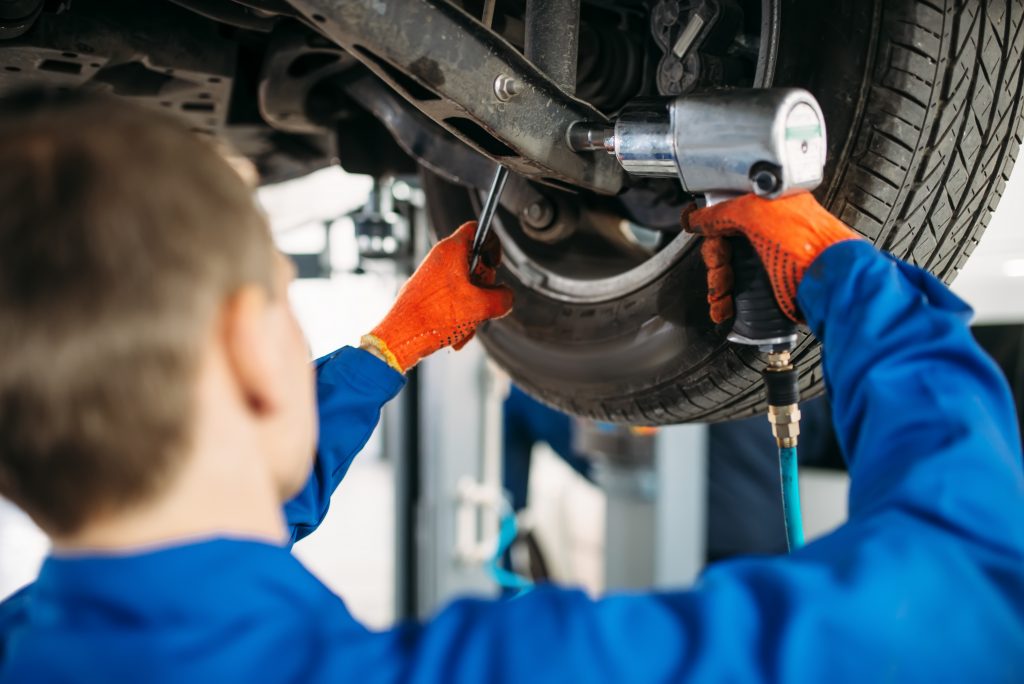
Why does a car go out of alignment?
Misalignment is caused by impacts from hitting potholes and bumps, loose steering or suspension mechanism and deterioration from aging of suspension parts. It is recommended that you have your car’s wheels aligned at least once a year or every 10,000 miles, whichever is earlier.
If tyres are worn unevenly does it mean the wheels are out of alignment?
Uneven wear can be caused by many factors such as improper wheel balancing, worn shock absorbers, worn steering components, alignment problems, etc.
Why does a car go out of alignment?
Misalignment is caused by impacts from hitting potholes and bumps, loose steering or suspension mechanism and deterioration from aging of suspension parts. It is recommended that you have your car’s wheels aligned at least once a year or every 10,000 miles, whichever is earlier.
If tyres are worn unevenly does it mean the wheels are out of alignment?
Uneven wear can be caused by many factors such as improper wheel balancing, worn shock absorbers, worn steering components, alignment problems, etc.